Socotra Island Blue Baboon Tarantula Caresheet and Bioactive Habitat Maintenance

Monocentropus balfouri
Difficulty Level: Intermediate
The Socotra Island Blue Baboon Tarantula, scientifically known as Monocentropus balfouri, is a hardy, heavy-webbing tarantula that’s famous for something tarantulas are usually terrible at: tolerating each other.
That doesn’t mean this is a beginner species because Monocentropus balfouri is still an Old World tarantula. They don’t have urticating hairs; they can move very quickly, and their venom is stronger than that of New World species. Even so, compared to many other Old World tarantulas, they’re often more reclusive than explosive, more likely to hide in their webbing than give you a threat pose.
M. balfouri is endemic to Socotra Island, an isolated island off the coast of Yemen near the Horn of Africa. Socotra is famous for its unusual plants, rocky landscapes, dry conditions, seasonal rainfall, and a ton of species found nowhere else on Earth! This isn’t your lush rainforest tarantula, but it isn’t a real desert spider either. They come from a dry, rugged island environment where rock crevices, shallow burrows, silk-lined retreats, and microclimates matter a lot.
In captivity, that means they need a setup that allows them to hide, burrow, web, and build. Deep substrate, strong ventilation, dry upper layers, access to a slightly more humid area, and plenty of anchor points will give this species what they need to settle in and create the kind of webbed fortress they are known for. And if you are keeping them communally, all of that becomes even more important.

Natural History, Description, and Related Species
Monocentropus balfouri was first described by Reginald Innes Pocock in 1897 from Socotra Island and named in honor of Sir Isaac Bayley Balfour, a Scottish botanist who studied the flora of Socotra. Monocentropus balfouri is the only species that remains in the genus Monocentropus, as of writing this care guide, because the others were moved or left outside the genus pending more work.
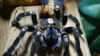
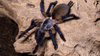
Adults are considered medium to large for tarantulas, often reaching around 5 to almost 6 inches in diagonal leg span, with some individuals being reported even larger. Adults have a striking combination of blue legs and pale cream and sandy tones. Mature males are usually leggier and sometimes look paler or washed out, while females usually have a heavier body and bolder contrast.
Like other Old World tarantulas, M. balfouri doesn’t have urticating hairs. Their main defenses are speed, retreat, threat posture, and biting if pushed far enough. Their venom has even been studied scientifically. Researchers have isolated insect-active peptides from M. balfouri venom that affect insect sodium and calcium channels. You don’t need to know that to keep them properly, but I think it’s important to know that their venom is built for stopping insects. It isn’t something to be afraid of every time you open the enclosure, but it’s also not something to treat flippantly.
Recommended Supplies for a Socotra Island Blue Baboon Tarantula
Because this species burrows, webs heavily, and uses structure, the enclosure should be built around substrate depth, anchor points, ventilation, and retreat space.
- Terra Aranea Bioactive Substrate
- BioShot for bioactive setups
- Stone Desert or gravel blended with sandier material for display setups
- Cork bark flats, rounds, or pieces for hides
- Bio Dude Leaf Litter
- Bio Dude Sphagnum Moss
- Dry branches, cork pieces, mold-resistant wood for web anchor points
- Hardy live plants like succulents or artificial plants
- Springtails where appropriate
- Shallow water dish
- Secure terrestrial or semi-arboreal style enclosure
- Feeding tongs
- LED grow lights for planted bioactive enclosures and to provide day/night cycle
Enclosure Size & Setup
The Socotra Island Blue Baboon is a terrestrial opportunistic burrower that will create web tunnels around their burrows by heavily webbing nearby branches, plants and basically anything else you give them as part of their retreat.
This is why a strictly terrestrial setup can work, but a slightly more structured enclosure is usually better. In the hobby, people sometimes describe this type of setup as “semi-arboreal,” but that doesn’t mean they need a tall arboreal enclosure. It means they benefit from a terrestrial enclosure with extra structure for webbing and climbing close to the ground simulating low bushes or the roots of trees.
DO NOT USE tall, arboreal enclosures! This is still a terrestrial tarantula, and unnecessary height increases the risk of deadly injuries from a fall.
Spiderlings
- Enclosure: Small secure sling enclosure
- Substrate Depth: Fill at least half to two-thirds of the enclosure with Terra Aranea
-
Humidity: Keep one small area slightly damp w/ a piece of moss, not soaking wet
- Decor: Small cork bark piece, leaf litter, starter burrow, and a few small web anchors like vertically oriented Bio Dude birch stalks
Spiderlings will often burrow and web heavily, and it is common for them to vanish into their enclosure for long periods of time. That doesn’t mean something is wrong. A secure sling setup will give them enough substrate to dig, enough structure to web, easy access to food and moisture, and the ability to hide while in premolt without being disturbed. At this stage, don’t keep them completely dry. Spiderlings dehydrate more easily than juveniles or adults, so offer a tiny water dish if space allows, or lightly moisten one area of the substrate or use a syringe to saturate the bottom level. The goal is to provide humidity and moisture without creating stagnant, swampy conditions, which can cause health problems and be fatal.
Juveniles
- Enclosure: Medium terrestrial or cube-style enclosure
- Substrate Depth: Fill one-half to two-thirds of the enclosure with Terra Aranea
- Ventilation and Humidity: Good cross-ventilation with a mostly dry surface and a slightly damp lower corner or lower layer.
-
Decor: Cork bark hide, branches, leaf litter, sphagnum moss in one area, and a shallow water dish
Juveniles are hardy and fairly easy to manage. They may use a hide, build a burrow, or turn the whole enclosure into a web tunnel system, which is my personal favorite. Once they settle in, they’ll become more visible than you would probably expect, especially in larger naturalistic setups where they feel secure with plenty of retreats and hiding spots.
Give them plenty of anchor points. The more you provide them to work with, the more elaborate their web tunnels will become. A bare enclosure with one hide and some dirt may be enough to technically keep them alive, but it in no way lets them show off the behaviors that make this species so fascinating.
Adults
- Enclosure: Large terrestrial or horizontal display enclosure with secure ventilation
- Substrate Depth: 4 to 8 inches of Terra Aranea, depending on enclosure size
- Ventilation and Humidity: Good cross-ventilation with a mostly dry surface and a slightly damp lower corner or lower layer.
- Decor: Large cork bark hide, web anchor points, leaf litter, dry branches, plants if desired (they will get webbed over), and a shallow water dish
Adult M. balfouri needs a spacious but secure, dry, well-ventilated enclosure with access to water. Give them mostly dry substrate, a full water dish, and occasionally pour water down one corner of the enclosure to saturate the lower levels of substrate and provide a moisture gradient.
A 5- to 10-gallon-style terrestrial enclosure can work for a single adult, depending on the size of your spider and the dimensions of the enclosure. For adults, floor space and usable structure matter more than empty, useless height. They need room to build, hide, web, and move without being exposed to a dangerous fall. Also make sure the lid is secure. This species may be calmer than some Old World tarantulas, but they’re still fast, strong, and very capable of exploiting a loose lid or gap in your enclosure.
Substrate & Humidity
This species should be kept on the drier side, but “dry” doesn’t mean neglected.
- Keep the surface mostly dry
- Overflow the water dish occasionally to hydrate one section of substrate
- Keep spiderlings slightly damper than adults
- Use sphagnum moss in small moisture pockets, not across the whole enclosure
- Maintain good cross-ventilation
- Avoid constantly wet substrate
Terra Aranea works well because it holds structure for burrowing while still allowing the surface to dry. For a drier, more Socotra-inspired setup, I like to blend in some Exo Terra Stone Desert or a little sand to give it a more realistic look and feel. The important thing is that the substrate should support their burrows and moisture gradients without becoming soggy.
The biggest mistake is thinking this species needs high humidity because Socotra gets seasonal rain, or thinking they need no moisture at all because Socotra is dry. Neither extreme is helpful. These spiders are using retreats, webbing, substrate, and rock crevices to buffer the conditions around them. So give them options.
Temperature & Lighting
- Maintain temperatures between 68 and 76°F
- Slightly warmer conditions can increase growth and feeding response
- Avoid overheating and direct heat lamps. Always use thermostats
- If supplemental heat is needed, heat the room rather than the enclosure
- Lighting is only needed for plants, display, or a consistent day/night cycle
Normal household temperatures are fine for this species. They don’t need extreme heat. In fact, keeping them too hot and dry is more dangerous than keeping them a little cooler.
If you do use supplemental heat, don’t place the heat pad under their enclosure. Burrowing spiders move downward to escape heat, and bottom heat reverses that natural gradient. If the spider digs down and finds warmer, drier substrate instead of cooler, more stable conditions, the enclosure becomes a death trap.
Lighting isn’t required for the tarantula, but if you use live plants, a low-output LED on a timer can work very well. Just make sure the spider has shaded retreats and plenty of cover. This is a reclusive species, and they can be a little photosensitive.
Feeding Schedule
Monocentropus balfouri has a strong feeding response once they've settled in, though some individuals might be a little skittish and run and hide when you open the enclosure. That’s normal behavior. They may grab the prey immediately, or they may wait until you leave and the room is quiet.
Feeding should be based on size, body condition, and life stage more than a rigid schedule. If the abdomen is wider than the carapace, they need to be fed less often. If the abdomen is thinner than the carapace, they need more prey more often.
Spiderlings
- Frequency: Once or twice weekly
-
Prey: Flightless fruit flies, confused flour beetles, small roach nymphs, pinhead crickets, or pre-killed prey pieces
- Post-molt: Wait 24 hours before feeding
Spiderlings will scavenge, so pre-killed prey works well. Place the prey near the burrow entrance or webbing and check on it later. Remove any uneaten prey within 24 hours to avoid mold and mites.
If you’re keeping a communal group, make sure food is distributed in more than one spot so the smallest individuals aren’t constantly outcompeted and be sure to provide more than enough for everybody.
Juveniles
- Frequency: Every 7 to 10 days
- Prey: Small to medium crickets, small roaches, or appropriately sized mealworms
- Guidelines: Prey should be no larger than the tarantula’s body length
- Post-molt: Wait 3 to 7 days before feeding
Juveniles are typically reliable feeders. They will take the prey quickly, drag it into the webbing, and disappear again. Be careful not to overfeed them, as that can lead to issues when they molt. Any uneaten prey should still be removed within 24 hours, especially if the tarantula is in premolt.
Adults
- Frequency: Every 10 to 14 days, or every 2 to 3 weeks depending on abdomen size
- Prey: Large crickets, roaches, or other appropriate feeder insects
- Guidelines: Adjust feeding based on abdomen size and activity
-
Post-molt: Wait 7 to 14 days before feeding, or until the fangs are fully hardened
For communal setups, feeding is where a lot of your problems show up. Offer enough prey that each spider has a chance to eat, but don’t dump in a ridiculous number of feeders and just walk away. Uneaten prey will stress your spiders, damage molting tarantulas, be unsanitary, smell bad, and make a lot of noise if you just leave them in there.
Supplements
Tarantulas don’t need any kind of vitamin or calcium supplement. Their feeder insects, though, should be gut-loaded with fresh fruits and vegetables or a pre-made gutload product for at least 24 hours before feeding.
This is even more important if you have communal setups because you’re trying to reduce competition and keep every spider healthy and in good condition. Healthy feeders make better meals, and consistent feeding helps prevent smaller individuals from falling behind.

Behavior & Handling
The Socotra Island Blue Baboon is often described as mellow for an Old World tarantula, and that can be true. It is also true that this is a fast spider with no urticating hairs and a venomous bite. Like all Old World tarantulas, they aren’t a species I recommend handling.
The best approach is to treat them as a display animal. Use tools during maintenance and keep a catch cup nearby. Open their enclosure slowly and pay attention to where the spider is before you start moving things around in there.
Respect their speed, plan your maintenance, and keep their enclosure secure.
A Note on Communal Keeping
This is the section everyone gets excited to talk about.
Monocentropus balfouri is one of the few tarantulas in the hobby that can be kept communally with some level of success. Keepers have reported groups sharing burrows, feeding near each other, webbing together, and even feeding on the same roach without problems.
Of course, communal doesn’t mean risk-free, and it doesn’t mean you can throw random tarantulas together. The safest communal setups usually start with spiderlings, often from the same sac or ones raised together from an early age. They need a properly sized enclosure with enough substrate, web anchors, hides, and feeding opportunities for the whole group. The enclosure has to be large enough to support the group, but not so oversized that individuals immediately split into separate territories and start acting like strangers.
If you are introducing individuals from different groups, or combining different sizes, that risk goes up. It’s usually better to move everyone into a fresh enclosure at the same time rather than dropping a new spider into an established spider’s territory.
Communal setups also require more attention. You need to monitor body condition, make sure smaller individuals are feeding, remove uneaten prey, and watch for signs that one spider is being outcompeted. Even with this species, cannibalism, injury, or slow starvation can happen, so any issues need to be addressed immediately. This usually means pulling the smaller tarantula from the communal enclosure and giving it its own enclosure for their safety and well-being.
For most keepers, especially anyone new to Old World tarantulas, I recommend keeping a single specimen first. Learn the species, their speed, how they web, feed, hide, and react during maintenance. Then consider building a communal project later when you are more comfortable working with them.
Maintenance & Bioactive Considerations
A naturalistic or bioactive setup can work for M. balfouri, but it needs to be built around dry conditions, ventilation, and webbing behavior. This is NOT the species for a wet tropical bioactive enclosure.
- Keep the water dish clean and full
- Spot clean boluses and waste when accessible
- Remove uneaten prey within 24 hours
- Keep most of the enclosure dry
- Maintain one slightly more humid area
- Provide cork bark, branches, and leaf litter for web anchors
- Use springtails in the more humid zone
-
Monitor for mold, mites, and stagnant air
Because this species webs heavily, you won’t always be able to reach every bolus or dead cricket without destroying the entire structure they built. Don’t tear apart their enclosure every week trying to keep it looking perfect. Spot clean what you can, maintain their water dish, and let the spider’s webbing do what it is supposed to do. Mine love webbing up their old molts into the walls of their tunnels for some reason. The enclosure will eventually become theirs, not yours, so don’t fight it. Your clean and elaborate habitat design will turn into a silk-covered bunker with the water dish half-buried in substrate, and the one surviving plant webbed into the wall as structural support. I am speaking from personal experience. Consider it a win.
Common Problems
- Too Much Moisture: Constantly wet substrate can lead to mold, mites, and unhealthy conditions
- Too Dry for Spiderlings: Young slings dehydrate more easily and need access to moisture
- Poor Ventilation: Dry setups still need airflow, especially if one section is kept damp
- Too Much Height: Falls can injure terrestrial tarantulas, even species that web and climb some
- Escapes: This species is fast and should be kept in a secure enclosure
- Communal Losses: Even successful communal species can experience cannibalism or individuals being outcompeted
- Overfeeding Communals: Dumping in too much prey can cause stress and sanitation problems
- Underfeeding Communals: Feeding too little can leave smaller individuals behind
- Handling Mistakes: Calm behavior can make keepers underestimate their speed
-
Premolt Confusion: Hidden, sealed-off spiders are often preparing to molt, not in need of rescue
Final Thoughts
Monocentropus balfouri are beautiful, hardy, unusual, and capable of behaviors that we never get to see from other species. The webbing alone makes them worth keeping, but the possibility of communal tolerance takes them to that next level. That being said, this is still an Old World tarantula. They’re fast, and their first choice is usually to run into a tunnel, but they can defend themselves if they feel trapped. Even though I have never been bitten by a tarantula in over 26 years of working with them, I would definitely not want to start with this species. Starting with just one tarantula is a great introduction to more advanced Old World keeping, but a communal setup should be treated as a serious project and not a novelty for social media clout.
If you keep them communally, start young, feed thoughtfully, monitor closely, and accept that there is always some risk and potential loss. This species may be more tolerant than most tarantulas, but they’re still tarantulas. They don’t read the care sheets or care about anecdotal reports on Facebook. Whether kept alone or as a carefully managed communal setup, Monocentropus balfouri is a perfect example of why tarantulas are so much more interesting than people give them credit for.
Written by Richard Stewart of Tarantula Collective 8/12/2026
- Josh Halter