The Bio Dude | Your #1 shop for all things reptile! | Spend $75 get $9.95 Flat Rate Shipping | Expect 2-3 days for order processing | NOTICE: We currently cannot ship live plants to California.

Top 8 Tarantula Species for Beginners

RSS
Top 8 Tarantula Species for Beginners

Choosing your first tarantula can be exciting, but it can also get confusing and overwhelming. There are hundreds of species in the hobby, and once you start reading care sheets, watching videos, and asking questions online, you will hear a dozen different opinions about the “best” beginner tarantula. Some people recommend the calmest species. Others recommend the cheapest. Some recommend the prettiest species they personally like, which is how new keepers end up thinking a fast, defensive, Old World tarantula is a great first spider, but it’s not.

A good beginner tarantula should be hardy, forgiving, easy to find captive-bred, and have straightforward care. They shouldn’t require extremely specialized care, constant adjustments, or advanced rehousing planning. That doesn’t mean the tarantula has to be boring, but beginner-friendly means the keeper has room to learn without the animal paying the price for every small mistake.
It’s also important to say this up front: tarantulas are not beginner pets because they are cuddly or interactive. They are display animals. Some species are calmer than others, and some may tolerate very careful handling, but handling is never necessary for the tarantula and always carries risk. A startled tarantula can bolt, fall, kick urticating hairs, or bite if they feel threatened.
With that in mind, here are eight of the best tarantula species for beginners.
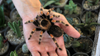
Please note: while there is an image of a someone holding a Mexican Red Knee, The Bio Dude DOES NOT advise holding your tarantulas without extensive experience. 

8. Chromatopelma cyaneopubescens - Green Bottle Blue Tarantula

The Green Bottle Blue Tarantula is one of the most colorful tarantulas in the hobby. Native to northern Venezuela, this species has bright blue legs, a metallic green carapace, and orange abdominal setae. It is one of the most unique-looking tarantulas on the planet. This species makes the list because it is very hardy, a great eater, and the best webbing tarantula you can keep. A well-established Green Bottle Blue will turn the enclosure into a heavy, webbed display, which makes it fun to observe even when the spider is not standing right out in the open.

They’re not my first recommendation for someone who is nervous, though. Chromatopelma cyaneopubescens can be fast, skittish, and more reactive than some of the calmer terrestrial species on this list. They aren’t difficult to care for, but they are a little less forgiving behaviorally than something like a Chaco Golden Knee or Curly Hair. Their urticating hairs can be very irritating and should be avoided when possible.

For the right beginner, especially someone who wants color, webbing, and a very active feeding response, this can be a fantastic first tarantula. Just understand what you are getting. This is not a slow-moving pet rock. It is a fast, beautiful, heavily webbing spider that should be respected during maintenance and rehousing.
A naturalistic setup for a Green Bottle Blue should offer dry conditions with a water dish, good ventilation, anchor points for webbing, cork bark, and enough structure for the spider to build the web fortress they clearly think they deserve.

7. Brachypelma hamorii - Mexican Red Knee Tarantula

When people picture a tarantula in their head, there is a good chance they are picturing a Brachypelma hamorii. This is the classic Mexican Red Knee Tarantula, and for decades, it has been one of the most recognizable tarantulas in the world.

There is a reason this species is so popular. They’re beautiful, hardy, long-lived, and manageable for new keepers. The black body with orange-red leg markings gives them that iconic tarantula look, and adults are usually very impressive display animals.
Care is straightforward. They are terrestrial New World tarantulas that do well with a properly sized enclosure, several inches of Terra Aranea substrate, a hide, a water dish, and good ventilation. They do not need a complicated setup, but they do appreciate a secure retreat and enough substrate to feel grounded.

The reason Brachypelma hamorii is not higher on this list is that they can be slow-growing, sometimes more expensive, and individuals are very quick to kick urticating hairs. That is not a dealbreaker, but beginners should understand that “calm” does not mean “defenseless.” Urticating hairs can be extremely irritating, especially if they get on your skin, in your eyes, or into your respiratory system.

This is also a CITES-regulated species, so it is especially important to buy captive-bred animals from reputable sources. Mexican Brachypelma species have been heavily affected by the pet trade historically, and responsible purchasing matters. Still, as a beginner species, Brachypelma hamorii deserves its reputation. It’s hardy, attractive, usually visible, and easy to care for when set up properly.

6. Avicularia avicularia - Pink Toe Tarantula

The Pink Toe Tarantula is probably the most commonly recommended arboreal tarantula for beginners, but I am adding an asterisk to this one. Not because it’s a bad beginner species. It can be a great one, but Avicularia avicularia is often misunderstood in captivity.
For years, people were told to keep Pink Toe Tarantulas warm and wet. That advice caused a lot of problems. Arboreal tarantulas from humid environments still need airflow. Humid doesn’t mean stagnant, and wet substrate and poor ventilation are a bad combination for this genus.

When kept correctly, Avicularia avicularia can be a beautiful, beginner-friendly arboreal tarantula, especially if you get them as well-established juveniles instead of spiderlings. They’re less intimidating than other tree-dwelling species, and their fuzzy appearance, pink toes, and silken tube retreats make them very appealing.

Their enclosure should be taller than it is wide, with cork bark, vertical structure, anchor points, a water dish, and excellent cross ventilation. A small amount of Terra Aranea  substrate can help maintain some moisture, but the enclosure should not be swampy. The goal is a well-ventilated arboreal setup with access to moisture, not a sealed tropical sauna. Having a light near the top that creates a warm spot and temperature gradient is advised.

This species is best for a beginner who has done a little homework and specifically wants an arboreal tarantula. They’re not as slow and forgiving during rehousing as some terrestrial species, and they may shoot a defensive stream of feces when stressed, which is rude, but honestly, their aim is impressive. If you’re prepared for arboreal care and understand the importance of ventilation, the Pink Toe Tarantula can be a great first step into tree-dwelling tarantulas.

5. Aphonopelma chalcodes - Desert Blonde Tarantula


The Desert Blonde Tarantula is one of the most famous tarantulas in the United States. This terrestrial species is native to the arid scrublands and desert regions of the American Southwest, especially Arizona, and northern Mexico.

This is one of those species that gets recommended to beginners for good reason. Adults are typically calm, hardy, and forgiving of normal beginner mistakes. They’re also beautiful in a more understated way, with pale blonde, tan, and golden tones instead of the bright reds or blues that usually grab attention online. I have called this species the golden retriever of tarantulas before, and I still think that fits. A well-established adult female Aphonopelma chalcodes can be calm, visible, and very easy to appreciate.

The main downside is that they are very slow growers. Spiderlings can look like little gray or tan dots for a long time, and juveniles may spend extended periods hidden in their burrows. They can also go long stretches without eating, especially during premolt or seasonal slowdowns, which seems to stress out new keepers who are used to pets eating on a predictable schedule.

The care is simple, though. Give them a terrestrial setup with several inches of dry Terra Aranea substrate, a secure hide or burrow starter, a water dish, and good ventilation. Do not keep them wet just because you are worried about humidity. A water dish and a sensible setup are usually enough for healthy captive care.

If you are patient, Aphonopelma chalcodes is one of the best beginner tarantulas available. If you aren’t patient, I suggest finding a captive-bred juvenile or an adult female.

They will be more expensive, but for a species that can live over 20 years, it is a solid purchase.

4. Grammostola pulchra - Brazilian Black Tarantula

The Brazilian Black Tarantula is one of the most classy tarantulas in the hobby, because a healthy Grammostola pulchra looks like it was carved out of black velvet. This New World terrestrial species is known for being hardy, slow-moving, long-lived, and calm. It has the classic tarantula shape without needing bright colors to be impressive. There is something about the clean black appearance of this species that makes it look almost perfect.
For beginners, Grammostola pulchra checks a lot of boxes. It is easy to care for, forgiving, and very manageable during maintenance. Adults are amazing display animals and spend a lot of time out of their hide when full grown.
The downsides are mostly practical. They can be expensive and hard to find when compared to some other beginner species. They also grow slowly, which means a spiderling may take years to become the big black showpiece people imagine when they buy one. They can also fast for long periods, which is normal for many Grammostola species but can definitely make new keepers panic.
Care should be simple and stable. A terrestrial enclosure with several inches of Terra Aranea substrate, a hide, a water dish, and good ventilation is all they need. I would avoid overcomplicating this species. Give them a secure, functional setup and then let them be a tarantula. For a beginner who wants a calm, classic, long-lived tarantula and does not mind slow growth, Grammostola pulchra is one of the best species in the hobby.

3. Brachypelma albiceps - Mexican Golden Red Rump Tarantula

Brachypelma albiceps does not always get mentioned as quickly as Brachypelma hamorii, but I think it deserves a place on a beginner's list. This Mexican terrestrial tarantula has a pale golden carapace, a dark body, and a very clean, striking appearance as it matures.
Like other Brachypelma species, it is hardy, long-lived, and easy to take care of. It’s also a little less flashy than the red-kneed species, which might actually be part of why I like it. It has a more subtle beauty, but once you see a good adult female, it is hard not to appreciate it.
For beginners, the appeal is simple. This is a long-lived, terrestrial New World tarantula with manageable care requirements and a generally steady disposition. They need a terrestrial enclosure with several inches of substrate, a hide, a water dish, and ventilation. Keep the setup mostly dry, provide access to water, and don’t overthink it.
The same cautions apply here as with other Brachypelma. They can kick urticating hairs, they may grow slowly, and they are protected under CITES, so captive-bred sourcing is important. You want to purchase from a reputable breeder or seller, not support animals being pulled from the wild.
This species also has enough personality and visual appeal to stay interesting after the beginner stage. Some beginner tarantulas are great starter animals but do not always hold people’s attention long term. Brachypelma albiceps is different. It is hardy enough for a first tarantula, but attractive enough that experienced keepers still want one in the collection.

2. Tliltocatl albopilosus - Curly Hair Tarantula

The Curly Hair Tarantula is one of the best beginner tarantulas ever, and probably one of the most forgiving species in the hobby. This species was known for years as Brachypelma albopilosum, but it’s currently placed in the genus Tliltocatl. Most keepers just call it the Curly Hair because thankfully common names don’t require us to explain taxonomy every time we mention an animal at a reptile expo.
The appeal is obvious because they’re super hardy, cheap, easy to find captive-bred, and their care is simple. They have that cute appearance with long, curly setae that give them that fuzzy look that makes them irresistible. They aren’t the most clever tarantulas in the hobby, but they’re easily the most adorable.
Curly Hairs are terrestrial and appreciate the ability to burrow, especially when young. A good setup should include several inches of Terra Aranea substrate, a hide or starter burrow, a water dish, and good ventilation. They can be kept simply, but they will also benefit from a more naturalistic setup with substrate they can move and shape plants or hides to take cover under.
Their demeanor is one of the big reasons they are so popular because they’re typically slow-moving and reluctant to bolt, which makes basic maintenance less stressful for new keepers. They can kick urticating hairs, and those hairs can be irritating, but in my experience they aren’t as quick to use them as other New World species.
My biggest complaint is that they can be a bit of a pet rock. They will sit in the same spot for days, disappear into a burrow during premolt, or develop a bald patch on the abdomen from kicking hairs. Beginners usually worry when this happens, but most of it is normal tarantula behavior.
So if you’re looking for a hardy, affordable, forgiving first tarantula, Tliltocatl albopilosus is almost always near the top of the list.

1. Grammostola pulchripes - Chaco Golden Knee Tarantula

If I had to pick one species as the best overall beginner tarantula, it would probably be Grammostola pulchripes, the Chaco Golden Knee. This New World terrestrial tarantula comes from the Gran Chaco region of South America, including areas of Paraguay and Argentina. It is hardy, long-lived, easy to care for, and easy to find captive-bred. The golden bands on the legs give it enough color to stand out, but it still has that classic big terrestrial tarantula look.

The main reason this species lands at number one is their temperament. No tarantula is guaranteed to be calm 100% of the time, and individual personalities will vary, but Grammostola pulchripes has one of the strongest reputations in the hobby for being steady, slow-moving, and relaxed. They are also a great display species. Adults are usually large enough to be impressive without being difficult to house, and many spend a good amount of time out in the open. They don’t need complicated care; a terrestrial enclosure with deep Terra Aranea substrate, a hide, a water dish, and good ventilation is all they need to thrive.
Of course, there are some downsides. Spiderlings can be drab and will spend a lot of time hidden in their burrow. They can also grow slowly and go on long hunger strikes that make new keepers panic. Males also do not live nearly as long as females, which is true across tarantulas generally but worth remembering when choosing a pet spider.
Still, as a beginner species, this one is hard to beat. Grammostola pulchripes gives new keepers a little bit of everything: manageable care, hardy nature, good size, beautiful appearance, and a reputation for being one of the calmest tarantulas in the hobby. That does not mean you should handle it casually or treat it like a toy. It’s still a tarantula, but as a first species for someone who wants to learn good husbandry without jumping straight into the deep end, the Chaco Golden Knee is about as good as it gets.

Final Thoughts

In my opinion, the best beginner tarantula is not the most colorful, the cheapest, or the one that gets the most attention online. It is the species that gives a new keeper room to learn while still meeting the needs of the animal.
For most beginners, I recommend starting with a hardy New World terrestrial species. They are generally more forgiving, slower-moving, and easier to set up than fast arboreal or fossorial species. That does not mean they are maintenance-free, and it definitely does not mean they are safe to handle without risk, but they are a better starting point for learning tarantula behavior, feeding, molting, enclosure setup, and long-term care.
Whatever species you choose, start with captive-bred animals whenever possible, research the natural history of the species, and build the enclosure around how that tarantula actually lives. A good beginner setup should provide security, appropriate substrate depth, a hide or retreat, a water dish, ventilation, and enough space for the animal to behave naturally. Beginner-friendly does not mean the tarantula has lower standards. It means the species is more forgiving while you learn to meet them.

Written by Richard Stewart of Tarantula Collective 7/9/2026

Previous Post

  • Josh Halter
   "