How Do I Add the Clean-Up Crew to my Bioactive Terrarium?

Written and fact-checked by Sophie Dwyer 5/6/2026
When people receive a clay springtail culture or isopods from The Bio Dude, they often wonder:
What is the best way to transfer the animals to the tank? and Should I add the contents of the container as well?
Methods may vary depending on how the animals are packaged, but the process is quite simple.
Adding Springtails
Live springtails generally come packaged in a few different ways. You may find them in charcoal cultures or in clay-based cultures like the ones we use at The Bio Dude.
For clay cultures, there are 2 main methods we use to get the springtails out:
The tap method
Remove the lid from the cup. Hold the cup upside down above the substrate and gently tap or flick the bottom. This knocks the springtails loose, and they fall into the substrate.
The water method
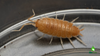
Like many light-weight arthropods, springtails float! Another way to remove them from the clay is to gently add a bit of water with a few sprays from your mister. Once a thin layer of water forms at the very top, causing the specimens to float, you can pour the liquid onto the substrate.
You may also be wondering, “Should I scoop out the clay with a spoon and add it to the tank?” We don’t recommend doing this because the clay will throw off your soil mix, and keeping the clay intact allows for future culturing and seeding opportunities. Here's how to culture springtails from your initial culture.
Springtails are very good at clinging to surfaces, so you won’t be able to get every single one out. This means you can culture the remaining population and have multiple seeding opportunities in the future.
For charcoal cultures, you can take the container and simply dump all its contents into your habitat. You’ll then want to mix the charcoal into the substrate or cover it with some substrate. The downside of this method is the possibility of the animals being damaged or crushed by the falling pieces. You can also use the water method mentioned above, which reduces that risk.
Adding Isopods
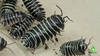
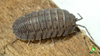
Isopods generally come in a container atop sphagnum moss, substrate, paper towels, or some combination of those elements. We usually choose a spot in the tank near a large piece of wood, a dense plant root system, or a water dish. Then we simply tip the cup and dump the entire contents, including any sphagnum moss and substrate, straight into the enclosure. With isopods packaged on a paper towel, we recommend removing it before dumping/shaking the isopods off it.


Once added to the tank, the isopods quickly move toward nearby cover and settle in on their own.
- Josh Halter