The Care and Maintenance of the Goliath Birdeater

Difficulty Level: Advanced
The Goliath Birdeater, scientifically known as Theraphosa blondi, has a reputation that precedes it, and most of that reputation has been earned honestly. This is one of the largest tarantulas in the world, characterized by a robust body, a massive leg span, a huge appetite, and some of the most irritating urticating hairs in the entire hobby. When kept correctly, though, they display incredible natural behaviors you rarely get to see so clearly in smaller species. A properly maintained T. blondi becomes a living exhibit of rainforest life right in your home.
In the wild, Goliaths thrive on deep, humid rainforest floors across northern South America. They occupy abandoned burrows or dig their own, and reinforce everything with thick layers of silk. Recreating these conditions in captivity requires focusing on moisture retention, a deep substrate, strong cross-ventilation, and ample horizontal floor space. With these needs met, they are surprisingly straightforward to maintain. They aren’t “impossible jungle spiders” so much as big, sensitive animals that need environmental stability.
Only captive-bred Goliath Birdeaters should be purchased when you are looking for a new pet. There is no responsible reason to buy a wild-caught specimen. Wild populations are still collected in parts of their range, and removing adults from the forest causes harm to local ecosystems. Choosing captive-bred animals reduces pressure on wild populations, cuts off demand for unregulated export, and supports a sustainable future for both the species and the hobby. We should always support businesses that do things the right way, not the cheapest way.
Natural History, Description, and Related Species
Theraphosa blondi is native to Guyana, Suriname, French Guiana, northern Brazil, parts of Venezuela, and the rainforest regions of the Guiana Shield. These forests are warm, humid, and rich with leaf litter, standing water, decaying wood, and deep soils that allow these massive spiders to create or occupy burrows. Goliath birdeaters remain hidden during most of the day and emerge at night to ambush prey moving across the forest floor.
Despite their dramatic name, birds make up only a tiny fraction of their natural diet. In the wild, they primarily hunt large insects, other arthropods, small amphibians, and occasionally small vertebrates that wander close enough to be captured. The idea of tarantulas regularly hunting birds comes from a famous illustration published in the early 1700s by German naturalist Maria Sibylla Merian. During her travels in Suriname she depicted a large spider attacking a hummingbird in a guava tree. This engraving circulated widely in Europe and helped establish the term “bird-eating spider” in popular imagination. Modern field observations describe large tarantulas as capable of hunting small birds when the opportunity arises, but it is rare rather than a significant part of their diet.
Adult females of Theraphosa blondi reach impressive sizes, often reported at 10 to 11 inches in diagonal leg span, with very heavy bodies. Their coloration ranges from chocolate brown to deep red-brown or burgundy, darkening further as they age. Juveniles may show subtle leg banding that fades with successive molts. These spiders have thick legs, a broad carapace, and some of the most irritating Type III urticating hairs in the family Theraphosidae. These hairs can remain airborne or settle on enclosure surfaces, sticking for long periods of time, so routine maintenance should be handled with care. T. blondi is also one of the few tarantula species with published veterinary biochemical reference values, which gives keepers a clearer understanding of hydration and general health baselines.
Theraphosa blondi vs. Theraposa stimi
Because T. blondi and Theraphosa stirmi are closely related and very similar in size, color, and overall build, they are often confused in the pet trade. Fortunately, there are several physical traits that help distinguish them. Adult T. blondi have long, noticeable setae on the patellae, giving the knees a visibly hairy appearance. Adult T. stirmi usually have smooth or nearly bare patellae with more exposed cuticle. Juvenile T. stirmi often have pale or pinkish tarsi on their front legs, while T. blondi spiderlings do not. This toe coloration fades as T. stirmi matures, so the knee characteristics remain the most reliable feature for adults.

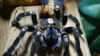
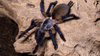
Pictured: Theraposa stirmi

Pictured: Theraposa blondi
Because this species is large and moisture-dependent, every component of the setup should aim to help maintain humidity without sacrificing airflow.
-
Terra Aranea Bioactive Substrate Kit - Includes Terra Aranea substrate, leaf litter, BioShot soil inoculant, and sphagnum moss.
- Cork Bark for hides
- Live moss and tropical plants to support humidity and stabilize soil
- Tropical springtails as a clean-up crew
- Acrylic Display Boxes or Tarantula Cribs for spiderlings and juveniles
- Large terrestrial enclosures for adults with secure lids and strong ventilation
- Wide water dish for consistent hydration
- Pressure sprayer for controlled watering
- Feeding tools to keep hands away from hair-flick range
Enclosure Size & Setup
Goliath Birdeaters require space, stability, and depth. Because they spend much of their time inside or near their burrows, the enclosure must always support natural digging behavior.
Spiderlings
- Enclosure: Small acrylic display box or sling crib with secure ventilation
- Substrate Depth: 2-3 inches of slightly damp Terra Aranea
- Humidity: Moderate to high; keep substrate damp but not swampy
- Décor: Small cork bark hide, optional live moss (highly recommended)
- Notes: Spiderlings grow quickly and require rehousing as needed to maintain depth and prevent escapes
Juveniles
- Enclosure: Medium acrylic display box or appropriately sized terrestrial enclosure
- Substrate Depth: 4-6 inches, kept evenly moist but never waterlogged
- Ventilation: Strong cross ventilation is essential to prevent stagnant air
- Décor: Cork bark hide, shallow water dish, leaf litter
Adults
- Enclosure: Large terrestrial enclosure with generous floor space, ideally at least 36"x18"x18" like this Habistat one
- Substrate Depth: Minimum 6-8 inches; deeper is better. Ensure no more than 1.5× the spider’s leg span between the substrate surface and enclosure top
- Ventilation: Balanced humidity with steady airflow
- Décor: Large cork flats or rounds for hides, multiple hiding options, leaf litter, live moss, hardy tropical plants
-
Notes: Avoid tall enclosures. A heavy tarantula falling from height can cause it serious injury.
Substrate & Humidity
T. blondi thrives with substrate that supports the natural moisture cycle of a rainforest floor. Terra Aranea is ideal because it retains moisture without compacting too tightly.
- Keep lower layers consistently moist
- Allow the surface to dry slightly between waterings
- Hydrate by pouring water into one corner rather than misting heavily
- Maintain a full water dish at all times
Humidity should be elevated but not swamp-like. Proper airflow is vital, as humid, stagnant air can be more dangerous than the enclosure drying out completely.
Temperature & Lighting
- Maintain room temperature between 72-78°F
- External heat sources are unnecessary unless your room falls below that range, in which case use a heat pad on the side
- Avoid heat lamps which can dry the enclosure or create harmful hot spots
- If you use a heat pad, place it on the side of the enclosure, never on the bottom. Tarantulas burrow down for cooler temperatures and placing a heat pad on the bottom could prove fatal.
- Lighting is optional but helpful for live plants; use plant-safe LEDs that do not raise the temperature to much in the enclosure.
Feeding Schedule
The feeding schedule scales with body size and molting frequency.
Spiderlings
- Frequency: Twice weekly
- Prey: Flightless fruit flies, confused flour beetles, or pre-killed tiny crickets/roach nymphs
- Prey over ⅔ of the sling’s size should be pre-killed
- Post-Molt: Wait 24-48 hours until fangs turn black and the exoskeleton hardens
Juveniles
- Frequency: Every 7-10 days
- Prey: 2-3 small to medium crickets or a medium Dubia roach
-
Guidelines:
- If the abdomen is thinner than the carapace’s widest point, feed more
- If wider than the carapace, feed less
- Post-Molt: Wait 3-7 days and ensure fangs are completely darkened
Adults
- Frequency: Every 2-3 weeks (or as needed)
- Prey: 4-5 large crickets or one large Dubia roach
- Guidelines: Same abdomen-size-based feeding principles apply
- Post-Molt: Wait 5-10 days until fangs fully darken
This species develops large abdomens quickly, so overfeeding must be avoided. Overfeeding contributes to mobility issues, poor molts, and increased risk from falls.
Remove uneaten prey within 24 hours.
Supplements
Tarantulas do not require calcium or vitamin supplements. Gutload feeder insects with fresh fruits and vegetables for at least 24 hours before feeding.

Behavior & Handling
Goliath Birdeaters are NOT a handling species. While often shy and reclusive, they become defensive when disturbed. Their urticating hairs are extremely irritating, their fangs are large, and their feeding response can be intense.
Most keepers interact only with the enclosure during maintenance. Respect their space, move slowly, and use tools whenever possible. This is very much an “observe but do not touch” species.
Maintenance & Bioactive Considerations
A well-established bioactive setup works beautifully for T. blondi. Terra Aranea, leaf litter, and springtails create a stable ecosystem that helps manage waste and moisture. However, the enclosure will still need routine care.
- Keep the water dish clean and full
- Refill substrate as it settles or degrades
- Avoid overwatering and drain any stagnant areas
- Trim or replace plants as needed. See this video for tips on maintaining plants in bioactive terrariums.
- Tropical springtails are beneficial, especially to prevent mold buildup
- Avoid most isopod species, as they may chew on a molting tarantula
- Dwarf white isopods may be used if needed for mold control but avoid calcium-dependent species
Common Issues
-
Dehydration:
- Maintain fresh water and keep your substrate damp but not saturated.
-
Poor Ventilation
- Excess moisture buildup leads to mold, mites, and stress.
-
Excessive Humidity
- Encourages bacterial problems and stagnant air, so always balance moisture with airflow
-
Irritating Hairs
- Wear gloves and avoid touching your face during maintenance. Always wash your hands immediately after working with this species.
-
Falls
- Heavy-bodied tarantulas must never be kept in tall enclosures or handled at heights more than 1.5 times their legspan
Written by Richard from Tarantula Collective – 5/14/2025
- Josh Halter