- Move enclosures to warmer areas: Upper floors and smaller rooms retain heat more effectively. If enclosures are kept in cooler spaces such as basements or large living areas, relocating them upstairs during winter can help stabilize temperatures without adding new equipment.
- Use insulation to trap heat: Foam board, cabinet panels, or simple insulation around shelving can reduce heat loss. Insulation does not generate heat but helps retain existing warmth.
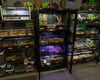
- Create a warm cabinet or microclimate: Rather than heating individual enclosures, you can warm a cabinet, closet, or shelving unit. A tall storage cabinet can be converted into a stable microclimate by installing heat tape or heat pads on the back wall and controlling them with a thermostat. Position the probe near the top center of the cabinet, add insulation, and place enclosures on shelves inside. This method warms the air within the cabinet, allowing multiple animals to benefit without the risk of burns or dehydration.
- Use heat pads correctly: Heat pads can be used safely only when mounted on the side or back of an enclosure and regulated by a thermostat. This creates a gentle temperature gradient, providing both warm and cool zones while heating the air rather than the substrate. Heat pads should NEVER be placed underneath a tarantula enclosure.


Winter is the season when heating systems fail most often. Ice storms, blizzards, and power outages can shut down your entire setup in minutes. This is why every keeper should have a winter emergency plan.
- Keep Emergency Heat Packs: Reptile shipping heat packs can provide gentle warmth for 24 to 72 hours. Keep several on hand so you can insulate enclosures in a bin or tote if the power goes out.
- Have Transport Containers Ready: Large plastic totes, newspaper, paper towels, and deli cups allow you to move spiderlings, juveniles, and adults quickly and safely if relocation becomes necessary.
- Know Where You Can Go: Have at least one place already arranged where your tarantulas can stay temporarily, such as a friend’s house, a family member’s home, or a workspace. Do not wait until a disaster occurs to have this conversation.
Final Thoughts
Tarantulas are ectotherms, meaning their body temperature and internal processes are controlled by the surrounding environment. They do not generate heat like humans. When temperatures rise, their metabolism increases, they move more, digest faster, and appear more active. When it cools, everything slows down. They eat less, move less, and grow more slowly. This is normal and part of their natural adaptation.