Jeweled Lacerta Caresheet and Bioactive Habitat Maintenance

Timon lepidus
Difficulty level: Intermediate
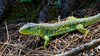
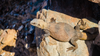
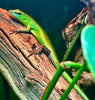
Jeweled lacertas Timon lepidus are diurnal, terrestrial lizards native to southwestern Europe, primarily the Iberian peninsula. These relatively large lizards are moderately difficult to keep, but can make excellent pets due to their hardiness, engaging intelligence, and potential for handling. Some of the trickiest aspects of keeping jeweled lacertas are their lighting and heating needs, but their humidity needs and diet are pretty straightforward.

Here’s an outline of how to care for a jeweled lacerta in a bioactive terrarium.
Materials needed for housing a jeweled lacerta:
- Front-opening enclosure with mesh top (see Housing Requirements for specifics)
- 100w Arcadia GoldenSun Basking Flood, x2
- Arcadia Ceramic Reflector Clamp Lamp, x2
- Bio Dude Digital Thermometer / Hygrometer, x2
- 22” Arcadia T5 HO Desert 12% UVB bulb
- 24” Bio Dude Solar Lamp Fixture
- 24” Bio Dude Solar Grow LED, x2-3, depending on enclosure
- 6” Bio Dude Solar Grow LED
- Digital lamp timer power strip
- The Bio Dude Terra Sahara Bioactive Substrate Kit
- Arid springtails
- Dwarf White isopods
- Powder Blue isopods
- Medium to large semi-arid plants
- Light-colored flat basking stones or concrete pavers, for climbing, basking, hiding, etc.
- Terrarium Glue
- Other décor items (rocks, cork bark, ghostwood, magnetic ledges, etc.)
- Bio Dude Rock Water Bowl, small
- Repashy Calcium Plus reptile supplement
- Bio Dude BugGrub insect gutload
- F10SC veterinary disinfectant
Housing Requirements
Generally speaking, jeweled lacertas can be as small as 16” or as large as 28” in total length. However, their adult size is largely sex-dependent (sexual dimorphism), so if you know what sex of lizard you have, and preferably the size of its parents, you can make an educated guess about how big yours is going to grow. Females usually grow to 16-20” long, and males usually grow to 22-28” long. Larger, although rare, is possible.
Why is this information important? Because the size of a reptile is a major factor in how big their enclosure needs to be. As a general rule, females can be housed in a 4’L x 2’W x 2’H (120 gallon) enclosure long-term, but males will need to be in a 6’Lx x 2’W x 2’H (150 gallon). Larger, of course, is best practice. Healthy jeweled lacertas are fairly active lizards, and will happily use as much space as you are willing to give them!
Recommended enclosures:
- 48" x 24" x 24" Sliding Glass Door PVC Habitat
- The Bio Dude® Exclusive 4x2x2 Enclosure by Kages
- The Bio Dude® Exclusive 6x2x2 Enclosure by Kages
- The Bio Dude® Exclusive 5x3x3 Enclosure by Kages
Can jeweled lacertas cohabitate?
If you want multiple jeweled lacertas, it’s best to keep them in separate enclosures. Although there are accounts of groups that seem to get along well, cohabiting this species comes with a very real possibility of unexpected violent conflict that most keepers are not equipped to navigate.
Substrate Requirements
Jeweled lacertas are native to a semi-arid environment with sandy/stony soil and drought-resistant vegetation. If you want to house your lacerta in a bioactive setup, you will need a bioactive substrate mix that is compatible with semi-arid conditions, as well as suitable microfauna (CUC) and plants.
You will need at least 6” of substrate in the enclosure. The Bio Dude’s Terra Sahara Bioactive Kit works well for semi-arid species like jeweled lacertas. This kit includes everything you need for peace of mind in setting up a new bioactive enclosure: semi-arid soil mix, sphagnum moss, leaf litter, and The Bio Dude’s BioShot soil inoculant.
You can’t have a bioactive enclosure without a good microfauna clean-up crew (CUC). For a semi-arid jeweled lacerta vivarium, a combination of arid springtails, dwarf white isopods, and powder blue isopods are likely to do well in this environment.
Plan on setting the enclosure up at least 1 month in advance so your plants and CUC can get established without the strain of having to deal with a reptilian roommate. This is a great time to quarantine your new lizard in a temporary enclosure, which will give you a chance to watch for illness, test for (and treat) parasites, and generally make sure you’re not introducing any pathogens into your new ecosystem. A quarantine enclosure should be set up much the same as the long-term enclosure, but with easily-cleaned décor and a temporary substrate like paper towels. The temporary enclosure itself can be a cheap fish tank (wrapped with paper for security) or even a modified plastic tub.
Décor (Environmental Enrichment) Requirements
A happy, healthy jeweled lacerta will be comfortable with spending most of its time out where you can watch it. The more space and variation in landscape they are given, the more unique behaviors you’ll be able to see from your pet.
Flat, light-colored stone like sandstone, flagstone, or even thin concrete pavers make for a nice, functional component of a jeweled lacerta enclosure. These stones should be used for creating both basking platforms and hiding spaces. However, if you stack the stones, make sure to secure them with Gorilla Glue or similar to prevent accidental shifting or collapse that could crush your pet.
Ghostwood and cork tubes/branches are great for varying the landscape in the enclosure and providing a different kind of climbing opportunity for your pet to explore. Large cork tubes in particular can be secured in a vertical position to replicate a tree trunk.
Live, drought-tolerant plants are essential to a functional semi-arid bioactive enclosure. Their roots help keep your soil fresh, balanced, and clean! Because jeweled lacertas are relatively large, active lizards, it’s best to choose sturdy types. Some candidates include:
- Aloe
- Echeveria
- Grasses such as Festuca grass and sedge grass (Carex)
- Haworthia
- Snake plant
Use the largest plants that will fit in your enclosure, as these are less likely to be severely damaged by your lacerta and will be more beneficial to your substrate. And make sure to quarantine them before adding them to your enclosure!
Lighting/Temperature/Humidity Requirements
Lamps should be on for 12 hours/day. Alternatively, you can use a smart timer to sync your lamps with your local sunrise and sunset times for more natural seasonal variation.

Visible Light
Jeweled lacertas are diurnal, which means that providing plenty of bright light in their enclosure is essential. Aside from better simulating the brightness of sunlight, it also helps create a distinct day-night cycle. Having a solid day-night cycle is important to healthy hormones (and therefore a healthy reptile!), but two heat lamps and a UVB is nowhere near bright enough for energizing your lacerta. Plus, semi-arid plants need a lot of bright light to stay healthy and growing.
A bioactive jeweled lacerta enclosure should have enough LED bar grow lamps to span at least 75% of the enclosure’s length, but more is ideal, especially if you have an enclosure wider than 2’. Arrange the lamps so that the basking area is noticeably brighter than the rest of the enclosure. This may require including an additional, smaller LED lamp as part of your basking array.
UVB
Appropriate exposure to high-quality UVB is essential to a pet jeweled lacerta’s wellbeing. We recommend providing a basking area with a UVI (UV Index) of 3.0-3.5 in order to make enough vitamin D3 and generally help keep your pet healthy. However, not all UVB lamps are high-quality (or even safe!). If the UVB is to be mounted over a mesh terrarium top, the Arcadia T5 HO 12% UVB kit is going to be your best bet. 22” will be enough to create a large enough basking area for an adult jeweled lacerta.
The strength of a UVB bulb diminishes with distance from the source, and mesh partly blocks the output as well. It’s best to measure the UVI at your basking spot with a Solarmeter 6.5 tool, but if that’s not an option, placing your basking area 14-16” below the UVB bulb should do the job. If you would like extra guidance, the Light My Reptile tool/website is very helpful.
Make sure to install your UVB bulb in a high-quality T5 HO fixture with a highly polished reflector. The Bio Dude Solar Lamp fixture is a good choice.
Heat
Like other reptiles, jeweled lacertas are cold-blooded, which means they need the right set of temperatures in their environment for their body to function properly. Here’s what your jeweled lacerta’s temperature gradient should look like:
- Basking area: 95-104°F
- Cool side: 70-85°F
- Nighttime: >60°F
Use digital probe thermometers to keep track of the temperatures in the enclosure. Place one probe in the basking area, and another on the cool side. Wait two hours after turning the heat lamp on to check your basking temp.
How do you heat a jeweled lacerta enclosure? All you need should be a couple of incandescent heat bulbs. Incandescent and halogen heat bulbs produce large amounts of sun-like infrared, unlike non-light emitting heat sources like heat projectors, ceramic heaters, and heat mats. This makes them the best and most natural way to help your cold-blooded friend regulate its metabolism!
Recommended heat bulbs:
*A different wattage may be required to achieve the right basking temperature for your pet. Basking temperature varies based on basking distance, room temperature, and even the enclosure itself. Be prepared to experiment a little bit to create the correct environment for your pet.
Incandescent basking bulbs have a wider, more even beam than their halogen counterparts, and are also much less intense. Although you may be tempted to use halogens for energy-efficiency reasons, halogens are best reserved for large basking distances or enclosures with a tight mesh and high obstruction rate.
A thermostat shouldn’t be used for micromanaging your basking temperature, but it’s a good safeguard against potential overheating. Plug your heat lamps into the thermostat, and place the thermostat’s probe on the cool end of the enclosure. The thermostat should be set to turn off the heat lamps at 86°F.
Note: Jeweled lacertas should be brumated each winter for best health.
Humidity
Jeweled lacertas are pretty tolerant when it comes to humidity, but it’s still important to pay attention to their humidity levels so they don’t get dehydrated. Ambient humidity for jeweled lacerta should stay between 40-60%, with plenty of ventilation. To monitor your enclosure’s humidity levels, use a digital probe hygrometer, with the probe placed on the cool side of the setup.
A humid hide lined with moist sphagnum moss and/or substrate should be available at all times. Don’t forget to water around the base of your plants as needed, but the setup should be kept primarily dry.
Dietary Requirements
Jeweled lacertas are omnivorous, which means that they eat both animal and plant matter, but they eat much more animal matter than plants. In the wild, they have a highly varied diet of beetles, snails, nestling birds, frogs, small mammals, smaller reptiles, and occasional fruit when available. Try to replicate this variety as much as you can with your own pet’s nutrition.
Appropriate invertebrates for jeweled lacertas include: crickets, grasshoppers, locusts, dubia roaches, discoid roaches, superworms, mealworms, mealworm beetles, silkworms, hornworms, and captive-bred snails.
Vertebrate prey can be provided, but should be used only as a treat to prevent obesity. Options include young mice, young quail, and Reptilinks.
Fruit provides important extra nutrients, but should be used sparingly, as it’s still high in sugar. Some options include strawberry, apple, banana, mango, peaches, grapes, figs, blueberries, and even crested gecko diet.
Feeding schedule
Jeweled lacertas have fast metabolisms, and need more food than the average lizard. Individuals of all life stages can be fed every other day, as much as they will eat in one sitting. However, adjust the feeding schedule and the size of each meal as needed to keep your pet in healthy body condition.
Supplements
Calcium and multivitamin supplements are a good way to help make up for minor deficiencies in a reptile’s diet. Repashy Calcium Plus is a good all-in-one supplement that can be used at every feeding. Supplements degrade over time, so supplements need to be replaced ever 6 months to stay effective.
Feeder insects must be well fed and gutloaded on a high-quality, plant-based diet in order to bring out your lizard’s best health (and its best colors!). Bio Dude BugGrub makes this simple!
Water
Jeweled lacertas should still have access to a small bowl of water at all times. Keep this water clean. 1x/week (or as needed), give the bowl a good scrub and a spritz with veterinary-grade disinfectant.
Maintaining Your Bioactive Jeweled Lacerta Terrarium
Bioactive enclosures are often touted as low-maintenance, but there are still some things you need to do to keep your mini-ecosystem functional and thriving:
- Water the plants. Drought-resistant plants still need watering! If the substrate around your plant’s roots feels dry when you stick your finger about 1” into the soil, it’s time for water. Make sure to water the substrate around the base of each plant, not just dump water on top.
- Remove extra poo and urates. Although your clean-up crew (CUC) should take care of poo on the substrate, waste in hard-to-reach places may end up sitting there instead of getting broken down. Urates also need to be manually removed, as the CUC won’t touch those.
- Prune the plants. As your plants grow, some of them might start to overrun the enclosure. Trim them regularly with clean scissors or shears to keep an attractive shape and prevent a “leggy” appearance.
- Add more biodegradables. Your CUC will break down your leaf litter and bark accents into soil over time, so you will need to add more every once in a while.
- Add The Bio Dude’s BioVive. Throughout the life of your bioactive terrarium, some elements become depleted. Mix this into your substrate every 6-12 months as needed.
Written by Mariah Healey of ReptiFiles, 10/10/2026
- Josh Halter