Arboreal Alligator Lizard Caresheet and Bioactive Habitat Maintenance

Abronia graminea
Difficulty level: Advanced
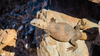
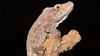
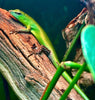
Arboreal alligator lizards Abronia graminea are diurnal, arboreal lizards native to Mexican cloud forests. These alluring, mythical-looking reptiles make advanced-level pets due to their need for a well-ventilated, high-humidity environment with very low nighttime temperatures.
The key to a happy, healthy reptile is proper husbandry. Here’s how to care for an arboreal alligator lizard with a bioactive terrarium.

Materials needed for housing an arboreal alligator lizard:
- 18”L x 18”W x 36”H mesh-topped enclosure, preferably larger
- 5.5” Arcadia Ceramic Reflector Clamp Lamp
- 50w Zoo Med Repti Basking Spot bulb
- 22” Arcadia T5 HO Forest 6% UVB bulb
- 24” Bio Dude T5 HO Solar Lamp fixture
- 16” Bio Dude Solar Grow LED
- Digital lamp timer power strip
- Mistking Starter kit + 3 nozzles
- Habistat Humidifier
- 18” x 18” substrate tray, at least 5” deep
- Bio Dude Terra Fauna bioactive substrate kit, 18x18x24/36
- Temperate springtails
- Cold-tolerant isopods
- Climbing branches, at least 2
- Tropical plants, as many as it takes to fill the enclosure
- Bio Dude Digital Thermometer / Hygrometer, x2
- Arcadia EarthPro Calcium Pro Mg supplement
- Repashy Supervite supplement
- Repashy SuperPig supplement
- Bio Dude BugGrub gutload
- Zoo Med Stainless Steel Feeding Tongs
-
Veterinary-grade disinfectant
Housing Requirements
Arboreal alligator lizards typically have a body (snout to vent) length of about 5”, with a long prehensile tail. Although this means that they are fairly small lizards, they still need an enclosure that is large enough for them to thermo- and hydro-regulate comfortably while still offering the security of being off the ground.
At very least, an arboreal alligator lizard should be housed in no smaller than a front-opening 18”L x 18”W x 36”H enclosure, with 24”L x 24”W x 36”H or larger being preferable. It’s best to use a mesh-topped enclosure, or at least a PVC/mesh hybrid design, rather than glass or PVC, as arboreal alligator lizards need plenty of air circulation to go with high humidity levels.
Can arboreal alligator lizards cohabitate?
Not all arboreal alligator lizards do well when housed in a group, and in some cases, it can be downright dangerous. Plan on housing this species singly.
Substrate Requirements
Although arboreal alligator lizards are strictly arboreal, if you want to go bioactive, you will need substrate. The right substrate is essential for supporting your live plants and CUC, as well as promoting stable humidity. The right substrate is also essential to a functional bioactive setup! For healthy plants and humidity support, you will need at least 3-4” or ~22 quarts of substrate on top of a drainage layer. Since you will be setting this up in a mesh enclosure, you will also need a substrate tray that matches the floor dimensions of the enclosure. This is something you can whip up yourself, or purchase pre-made.
The Bio Dude’s Terra Fauna Bioactive Kit works well for arboreal alligator lizards. This kit includes everything you need for peace of mind in setting up a new bioactive enclosure: drainage material, mesh, tropical soil mix, sphagnum moss, leaf litter, and The Bio Dude’s BioShot soil inoculant.
You can’t have a bioactive enclosure without a good microfauna clean-up crew (CUC). The tricky part with an arboreal alligator lizard vivarium is that you need a CUC that can tolerate chilly nights: think Armadillidium nasatum, A. gestroi, or A. klugii. Temperate springtails are more likely to work for this setup than the tropical ones typically used in high-humidity setups. You can also add earthworms to help keep the soil aerated!
Plan on setting the enclosure up at least 1 month in advance so your plants and CUC can get established without the strain of having to deal with a reptile roommate. This is a great time to quarantine your new addition in a temporary enclosure, which will give you a chance to watch for illness, test for (and treat) parasites, and generally make sure you’re not introducing any pathogens into your new ecosystem. A quarantine enclosure should be set up much the same as the long-term enclosure, but with easily cleaned-décor and a temporary substrate like blue shop towels. The enclosure itself can be a cheap fish tank or even a modified plastic tub, as long as it’s set up in a way that allows the lizard to climb and hide.
Décor (Environmental Enrichment) Requirements
Arboreal alligator lizards are generally shy animals that need lots of places to hide, but the enclosure should also be enriched with variety in textures and climbing materials. Plenty of foliage and plant life is essential for this species! Here’s what you’ll need to include in the enclosure:
Branches like ghostwood, manzanita, cork, and jungle branches make great perches and skyways.
Cork tubes can provide welcome hiding places. Place these everywhere!
Live, tropical plants are essential to a functional tropical bioactive enclosure. Their roots help keep your soil fresh, balanced, and clean! Their leaves also provide cover and humid microclimates for your pet to hide in. Arboreal alligator lizards also like to drink from the water stored inside of cup-shaped plants like bromeliads. Here are some good choices:
- Bromeliads
- Pothos
- Sheet moss
- Snake plant
- Spanish moss
- Tillandsia (air plants)
Use the largest plants that will fit in your enclosure, as these are less likely to be damaged by your pet’s activity and will be more beneficial to your substrate. And make sure to quarantine them before adding them to your enclosure!
Lighting/Temperature/Humidity Requirements
Lamps should be on for 12 hours/day. Alternatively, you can use a smart timer to sync your lamps with your local sunrise and sunset times for more natural seasonal variation.
If you are keeping your arboreal alligator lizard outdoors (this only works with screen enclosures), place the enclosure in a spot that receives some direct sunlight, but mostly shade. Daytime and nighttime temperatures should fall within the parameters listed below, although the daytime ambient temperature range can be expanded to 70-83°F. Overheating is the greatest danger to your pet when outdoors.
Visible Light
Since arboreal alligator lizards are diurnal (active during the day), they benefit from having extra visible light in their enclosure to help better simulate the brightness of sunlight. In addition, a heat lamp plus UVB provides nowhere near enough light to nourish the live plants that your bioactive setup needs to stay functional and healthy! In other words, you will need extra illumination.
Your bioactive arboreal alligator lizard enclosure should have at least one LED plant light, long enough to span the enclosure’s length.
UVB
Arboreal alligator lizards can’t survive without appropriate UVB lighting in their enclosure. They require a basking branch with a UVI (UV Index) of 3.0-5.0 in order to make enough vitamin D3 and generally stay healthy. Not all UVB lamps are high-quality (or even safe!). We recommend the Arcadia T5 HO Forest 6% UVB kit for Abronia graminea.
The strength of your UVB diminishes with distance from the source, and mesh partly blocks the output as well. It’s best to measure the UVI at your basking spot with a Solarmeter 6.5 tool, but if you don’t have access to one, placing your basking area 7-10” below the UVB bulb is a good starting point.
Heat
Like other reptiles, arboreal alligator lizards are cold-blooded, which means they need the right set of temperatures in their environment for their body to function properly. Here’s what the temperature gradient for Abronia graminea should look like:
- Basking: 88-92°F
- Shade (ambient): <83°F
- Nighttime: 50-60°F
The heat lamp should only be on for a few hours per day, for example, 11 a.m.- 2 p.m. This helps prevent overheating.
Use two digital probe thermometers to keep track of the temperatures in the enclosure. One probe should be on the basking branch, under the heat lamp, and the other probe should be toward the floor of the enclosure.
How do you heat an arboreal alligator lizard enclosure? All you need should be an incandescent heat bulb in a 5.5” ceramic-socket dome lamp. Incandescent heat bulbs produce sun-like infrared, unlike non-light-emitting heat sources like heat projectors, ceramic heaters, and heat mats. This makes them the best and most natural way to help your cold-blooded friend regulate its metabolism!
Recommended heat bulbs:
*A different wattage may be required to achieve the right basking temperature for your arboreal alligator lizard. Basking temperature varies based on basking distance, room temperature, and even the enclosure itself. Be prepared to experiment a little bit to create the correct environment for your pet.
A thermostat isn’t required for micromanaging your basking temperature, but it’s a good safeguard against potential overheating. Plug your heat lamp into the thermostat, and place the thermostat’s probe in the shade toward the bottom of the enclosure. The thermostat should be set to turn off the heat lamp at 83°F.
How do you cool an arboreal alligator lizard enclosure at night? Unfortunately, miniature evaporative cooling units simply don’t have the power to get the job done. A high-BTU air conditioning unit might be able to do it, but it does result in an astronomical electric bill. Common practice among keepers is to move the enclosure outdoors at night, or to open a window/door during the colder months to properly chill the room. Large nighttime drops in temperature are important for Abronia, and one of the biggest challenges of keeping them is that if you don’t have a way to properly chill them at night, this is not the pet for you.
Humidity
As cloud forest-dwellers, arboreal alligator lizards need a very high humidity environment in order to stay adequately hydrated. However, they also need plenty of ventilation to ensure that the enclosure stays cool and fresh. This humidity should be >85% at night, but 45-65% during the day.
High airflow means that you will need aggressive humidity management. If your home is naturally more humid, or you are able to keep your Abronia graminea outdoors, you may be able to get away with (heavy) manual misting 2x/day: once in the morning and once at night. It also helps to pour water into the substrate (for example, when watering plants), as evaporation from the soil helps stabilize humidity levels. However, we strongly recommend installing an automatic misting system with at least 3 nozzles for best results.
To support the nighttime humidity spike, adding a reptile humidifier (fogger) and letting it run for a few hours every evening can be very helpful. Make sure to thoroughly clean and disinfect your humidifier weekly with a veterinary-grade disinfectant!
To monitor your enclosure’s humidity levels, use a digital probe hygrometer, with the probe placed in a shady spot in the middle of the enclosure.
Dietary Requirements
Arboreal alligator lizards are exclusively insectivorous, which means that they eat bugs. Provide as wide of a variety as possible, not just the same 1-2 types all the time. This helps facilitate balanced nutrition and also keeps things interesting for your pet.
Feeder Insects
- Crickets
- Grasshoppers
- Dubia roach nymphs
- Discoid roach nymphs
- Black soldier fly larvae
- Silkworms
- Hornworms
- Mealworms
All hard-bodied feeder insects should be smaller than the space between your arboreal alligator lizard’s eyes at its widest point. There can be some flexibility for soft-bodied feeders like hornworms and silkworms.
Feeding schedule
Arboreal alligator lizards get fat easily and they really don’t eat much! As a general rule, offer 2-4 bugs per week, but adjust the quantity based on your pet’s individual body condition and the size of the feeders. For example, if you’re using smaller feeders, you can offer more than if you are using larger ones.
Supplements
All feeder insects should be dusted with a reptile calcium powder at every feeding. Every 2-3 feedings, add a multivitamin with vitamins A and D3 as well. We recommend Arcadia CalciumPro Calcium with Magnesium and Repashy SuperVite. Including Repashy SuperPig in your routine is also a good idea, as carotenoids are important for Abronia graminea.
To “dust” feeders with supplement powder, place the feeders in a sandwich bag or small container, add the supplement, and shake gently until the feeders are evenly coated.
Supplements degrade over time, so we recommend replacing your supplements every 6 months to keep them fresh.
Gut-loading
All live feeder insects MUST be fed quality food in order to provide optimal nutrition to your pet (and thus promote optimal health). This process is called “gut-loading.” Rather than giving your feeders kitchen scraps or random fruits and vegetables, use a plant-based insect chow specifically formulated for gut-loading, such as The Bio Dude’s Bug Grub.
Gut-load feeders for 2-3 days before offering them to your arboreal alligator lizard.
Water
Arboreal alligator lizards like to use their plants as drinking bowls, and bromeliads are particularly good at filling this role. Make sure the bromeliads in the enclosure always have fresh water to offer by flushing them out regularly and diligently removing any poo/urates that have been deposited on/in the plant.

Maintaining Your Bioactive Arboreal Alligator Lizard Terrarium
Bioactive enclosures are often touted as low-maintenance, but there are still some things you need to do to keep your mini-ecosystem functional and thriving:
- Water the plants. Misting isn’t always enough to keep plants adequately hydrated. If you see wilting, that means they’re not getting enough! If the substrate around your plant’s roots feels dry, it’s time for water. Make sure to water the substrate around the base of each plant, not just dump water on top.
- Keep an eye on the automatic misting system. If you’re using an automatic mister, make sure to use distilled or reverse-osmosis water to prevent clogs. You also need to make sure it’s not flooding the enclosure. Start with misting for 15 seconds every 4 hours, then increase the frequency as needed. If that’s not enough, you can increase the duration as well. If your substrate is starting to get soggy (or heaven forbid, your plants are yellowing and rotting at the base), unplug the misting system, add a fan, and mist by hand for a little while until things dry out.
- Scrub the branches. The CUC tends to have difficulty accessing branches, so you need to scrub your pet’s climbing branches by hand. Give them a scrub with hot water when you notice lizard poo or urates.
- Prune the plants. As your plants grow, some of them might try to overrun the enclosure or grow through the top. Trim them regularly with clean scissors or shears to keep an attractive shape and prevent a “leggy” appearance.
- Top up the CUC. Your Abronia graminea might snack on its CUC from time to time. Keep an eye on the CUC population and add more isopods or springtails as needed.
- Add more biodegradables. Your CUC will break down your leaf litter and bark accents into soil over time, so you will need to add more every once in a while.
- Add The Bio Dude’s BioVive. Throughout the life of your bioactive terrarium, some elements become depleted. Mix this into your substrate every 6-12 months as needed.
Written by Mariah Healey of Reptifiles, 8/11/2026
- Josh Halter